Showing posts with label technology. Show all posts

Tuesday, March 13, 2012

Give me a place to stand on, and I will move the Earth

I may not agree with every aspect of his ideas*, but it is outside the box thinking like this that leads to new breakthroughs in archaeology.
*does it work when not on concrete?

The man has developed his own website. Check out his musings here:http://www.theforgottentechnology.com/

Tuesday, May 24, 2011

Incredible holographic technology

This material is crazy! I can see the potential uses for museum/galleries that don't have a lot of space but want to show, for example, 3D representations of ruins and the like.


Friday, November 12, 2010

Robot films interior of Feathered Serpent Temple, Teotihuacan, Mexico


The first images of the interior of the tunnel found under the Feathered Serpent Temple, in Teotihuacan, captured by a small robot introduced by archaeologists of the National Institute of Anthropology and History (INAH), were presented to the media due to the relevance of the event in the history of Mexican archaeological research.

This is the first time a robot is integrated to archaeological exploration in Mexico; a similar devise was used in Egypt 10 years ago to explore a tomb.

Tlaloque 1, named after the mythological beings that helped Tlaloc, covered the first stretch of a tunnel that has not been walked for 1,800 years. Images reveal that the passageway built more than 2,000 years ago to represent the underworld, is stable enough to be explored by archaeologists soon.

During the presentation of the images to communication media representatives, the INAH national coordinator of Archaeology, Salvador Guilliem, was present. It was mentioned that this robotic device adds up to the technologies used by archaeologists in this project. Several weeks ago, geo radar was used to determine with precision that the tunnel conducts to 3 chambers, where the remains of important characters might have been buried.

Archaeologist Sergio Gomez Chavez, director of “Tlalocan Project: Underground Road”, informed that this is the first time that this kind of device is used in Mexico; “Apparently it had been used in Egypt, and us, as INAH researchers, are the first ones to develop it and use it in our country”.

Click here for a slideshow of images

Monday, October 25, 2010

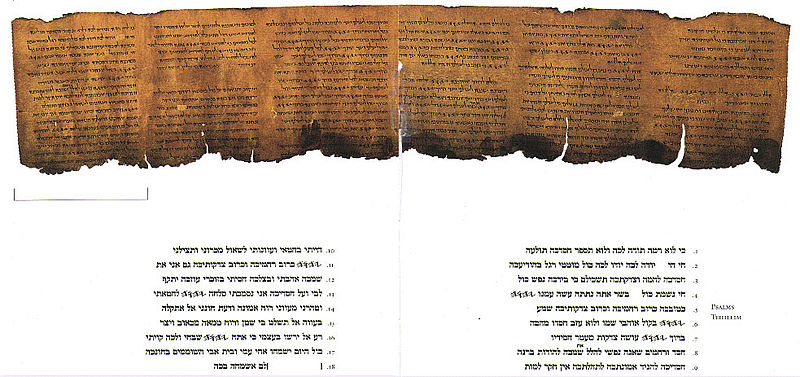
The wonders of the internet - Dead Sea Scrolls to go online


The Dead Sea Scrolls, among the world's most important, mysterious and tightly restricted archaeological treasures, are about to get Googled.

The technology giant and Israel announced Tuesday that they are teaming up to give researchers and the public the first comprehensive and searchable database of the scrolls – a 2,000-year-old collection of Hebrew, Aramaic and Greek documents that shed light on Judaism during biblical times and the origins of Christianity. For years, experts have complained that access to the scrolls has been too limited.

Once the images are up, anyone will be able to peruse exact copies of the original scrolls as well as an English translation of the text on their computer – for free. Officials said the collection, expected to be available within months, will feature sections that have been made more legible thanks to high-tech infrared technology.


Read more: http://acn.liveauctioneers.com/index.php/component/content/article/3353?utm_source=feedburner&utm_medium=email&utm_campaign=Feed%3A+ACNlatestnews+%28Auction+Central+News+-+Latest+News%29#ixzz13MwgrpW3

Wednesday, June 23, 2010

First Icons of St Peter and Paul - discovered using lasers


ROME — Twenty-first century laser technology has opened a window into the early days of the Catholic Church, guiding researchers through the dank, musty catacombs beneath Rome to a startling find: the first known icons of the apostles Peter and Paul.

Vatican officials unveiled the paintings Tuesday, discovered along with the earliest known images of the apostles John and Andrew in an underground burial chamber beneath an office building on a busy street in a working-class Rome neighborhood.

The images, which date from the second half of the 4th century, were uncovered using a new laser technique that allows restorers to burn off centuries of thick white calcium carbonate deposits without damaging the brilliant dark colors of the paintings underneath.

The technique could revolutionize the way restoration work is carried out in the miles (kilometers) of catacombs that burrow under the Eternal City where early Christians buried their dead.

The icons were discovered on the ceiling of a tomb of an aristocratic Roman woman at the Santa Tecla catacomb, near where the remains of the apostle Paul are said to be buried.

(Story Source)

Monday, June 21, 2010

City of Avaris, discovered by radar


This is what I like to see! Not to be confused with Avarice or Avatar...
Very exciting stuff, locating city remains using radar imaging.

An ancient Egyptian city believed to be Avaris, the capital of the Hyksos people who ruled 3,500 years ago, has been located by radar, Egypt's culture ministry says.

A team of Austrian archaeologists used radar imaging to find the underground outlines of the city in the Nile Delta, a now densely populated area.


The Hyksos were foreign occupiers from Asia who ruled Egypt for a century.

Avaris was their summer capital, near what is now the town of Tal al-Dabaa.

The radar images show the outlines of streets and houses underneath the green farm fields and modern towns in Egypt's Delta.

Egyptian antiquities chief Zahi Hawass said in a statement that the area could be part of Avaris, the summer capital of the Hyksos who ruled Egypt from 1664-1569 BC, during the 15th Dynasty.

"The pictures taken using radar [imaging] show an underground city complete with streets, houses and tombs which gives a general overview of the urban planning of the city," Dr Hawass said in a statement.

Irene Mueller, who heads the Austrian team, said the main purpose of the project had been to determine how far the underground city extended.

"The aim of the geophysical survey was to identify the size of the ancient city and the mission managed to identify a large number of houses and streets and a port inside the city," she said.

"The mission also identified one of the Nile river tributaries that passed through the city, as well as two islands," she was quoted as saying in the statement.

(Story Source: BBC)